

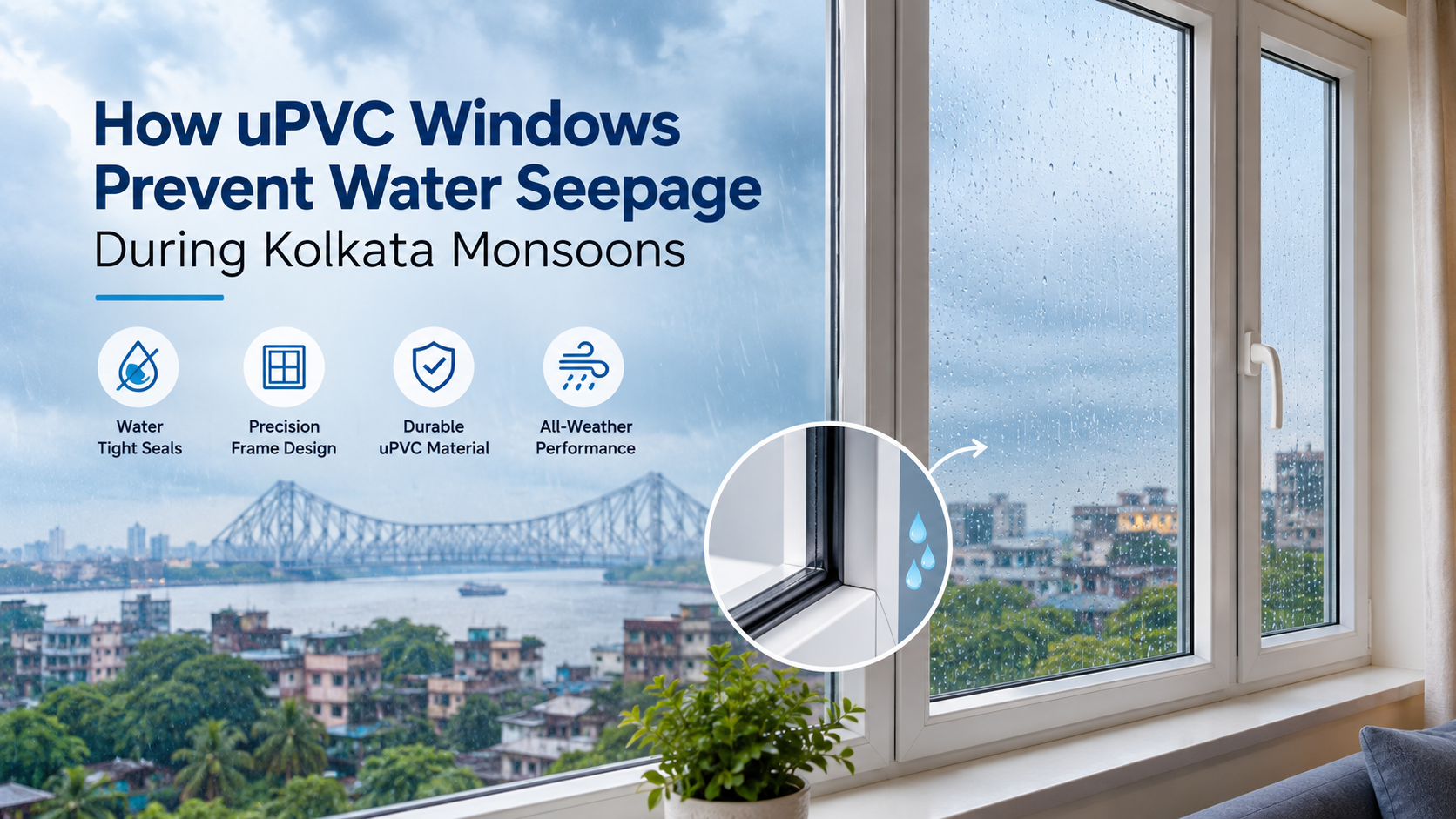
How uPVC Windows Prevent Water Seepage During Kolkata Monsoons: A Technical Profile Breakdown
Kolkata’s monsoon season can put residential windows to the test. Heavy rainfall, strong winds, high humidity and repeated exposure to moisture can reveal weaknesses around window frames, seals and installation joints. If rainwater begins entering through a window, it can leave damp patches on walls, damage paint and affect the comfort of your home.
For homeowners looking for monsoon water leakage protection with uPVC windows in Kolkata, understanding how window profiles work is an important first step. The frame material matters, but so do the profile design, weather seals, drainage provisions, locking mechanism, and quality of installation.
Promiplast Windows offers uPVC window solutions designed for Kolkata’s hot, humid, and rainy climate. Its product range includes casement, sliding, folding, top-hung and tilt-and-turn windows. Choosing the right configuration and ensuring correct installation can help reduce the risk of rainwater entering your home.
In this guide, we explain the technical features to check, the common causes of window leakage, and how to prepare your windows before the monsoon arrives.
Why Does Water Seep Through Windows During Kolkata Monsoons?
Water seepage doesn’t always mean the window material has failed. In many cases, the problem develops where different parts of the window system meet.
The most common areas to investigate include:
- Frame-to-wall joints: Gaps or deteriorated sealing around the window frame can allow rainwater to enter the surrounding wall.
- Worn weather seals: Damaged, displaced, or compressed rubber gaskets may no longer seal the window sash properly.
- Blocked drainage openings: Dirt and debris can obstruct drainage channels, preventing collected rainwater from flowing outside.
- Poor sash alignment: If the movable window panel does not sit correctly against the frame, gaps may remain when the window is closed.
- Incorrect installation: Uneven positioning, unsuitable sealing or poorly finished joints can compromise the performance of an otherwise suitable window.
- Wind-driven rain: Strong winds can push rain against window surfaces and expose weaknesses that may not appear during light rainfall.
Identifying the exact entry point is essential. Applying sealant to the most visible gap without investigating the source may only provide temporary relief.
How uPVC Window Profiles Help Prevent Water Seepage
uPVC stands for unplasticised polyvinyl chloride. It is a rigid window-frame material that does not rust like metal or rot like untreated timber when exposed to moisture.
However, water-resistant uPVC material alone does not make an entire window waterproof. The complete window assembly must be designed, fabricated, installed, and maintained correctly.
Here are the main technical elements that influence monsoon performance.
1. Profile Design and Frame Construction
The profile is the shaped section used to construct the window frame and sash. Its geometry determines how the components fit together and contributes to the window’s structural performance.
Well-designed profiles can accommodate glazing, weather seals, and, depending on the system, drainage pathways. The arrangement of these components influences how the window manages rainwater and maintains a close fit when shut.
When comparing uPVC windows for a Kolkata home, ask about:
- The profile system used for the selected window style.
- The fit between the frame and the movable sash.
- The provision for weather seals and drainage.
- The reinforcement and structural requirements for the window size.
A profile should be assessed as part of the complete window system rather than as an isolated material specification.
2. Weather Seals and Gaskets
Weather seals help close the gaps between the window frame and sash. When the window is shut, the seals create a barrier that limits the entry of wind, dust, and rainwater.
Casement windows, for example, close against the frame rather than relying solely on overlapping sliding panels. Depending on the design, their sealing arrangement can provide a close perimeter fit when the sash is properly aligned and locked.
For reliable performance, check whether the gaskets:
- Run continuously around the intended sealing areas.
- Sit correctly in their grooves.
- Remain flexible rather than becoming cracked or displaced.
- Make consistent contact when the window is closed.
Even a good-quality gasket cannot compensate for a poorly aligned sash or incorrectly installed frame.
3. Drainage Channels and Water Outlet Openings
Some rainwater may reach the external side of a window’s seals or enter designated parts of the profile system. Properly designed drainage provisions help direct this water towards the exterior.
Drainage is particularly important during heavy rainfall because blocked outlets can allow water to collect where it should drain away.
Before the monsoon season, inspect accessible drainage openings for dust, leaves, and other debris. Clean them gently without damaging the profile or altering the drainage design.
Important: Drainage openings should never be sealed shut simply to stop a leak. Doing so can prevent water from escaping and may make the problem worse.
4. Reinforcement and Window Alignment
Internal reinforcement may be used in uPVC window systems where structural requirements call for additional rigidity. Its suitability depends on the profile, window dimensions, hardware, and expected loads.
A stable frame helps the movable sash maintain its intended position. If the frame or sash becomes misaligned, the weather seals may not make uniform contact, creating potential paths for water or air to pass through.
If a window is difficult to close, rubs against its frame, or appears uneven, have the alignment and hardware inspected rather than forcing the handle.
5. Correct Installation Around the Window Opening
The joint between the window frame and the building wall is a separate potential route for water entry.
Even when the window itself is functioning properly, poorly finished perimeter joints can allow rainwater to reach the interior wall. The installation must account for the opening’s condition, correct positioning, appropriate sealing materials and suitable exterior weather protection.
Professional installation should include checks for:
- Correct frame positioning and alignment.
- Properly finished frame-to-wall joints.
- Suitable exterior sealing.
- Unobstructed drainage provisions.
- Smooth sash operation and consistent locking.
This is why choosing a window manufacturer that also provides professional installation is important. Promiplast Windows highlights expert installation and free site measurement as part of its service offering in Kolkata.
How to Check Your Windows Before the Monsoon
A simple inspection can help identify visible issues before the next spell of heavy rain.
Step 1: Inspect the wall around the frame.
Look for damp patches, peeling paint, discoloured plaster or water marks near the top and sides of the window.
Step 2: Examine the weather seals.
Check for visible gaps, loose sections, cracks or flattened gaskets. Avoid pulling out seals unless you know how they are fitted.
Step 3: Check the drainage openings.
Remove loose dirt from accessible drainage outlets using a soft brush or another suitable, non-damaging cleaning method.
Step 4: Test the closing mechanism.
Close and lock the window normally. Check for uneven gaps, unusual resistance or a sash that does not sit flush against the frame.
Step 5: Inspect the perimeter joints.
Look for cracks or deteriorated sealant between the frame and wall. Do not assume every damp patch near a window originates from the window itself; water can also travel through the surrounding building fabric.
Step 6: Arrange a professional assessment if leakage persists.
If water continues to enter during rainfall, ask a qualified technician to identify the source before replacing seals or applying additional sealant.
Never lean outside a high-rise window to inspect its exterior. Leave inaccessible areas to trained professionals.
uPVC Window Leakage: Repair or Replace?
The right solution depends on the cause of the problem. Replacing a complete window when the issue is limited to a damaged seal may be unnecessary. On the other hand, repeatedly applying sealant will not solve a misaligned frame or an unsuitable drainage arrangement.
Consider the following guide:
- Damaged or displaced gasket: The seal may need adjustment or replacement.
- Blocked drainage outlet: Appropriate cleaning may restore drainage.
- Loose or deteriorated frame-to-wall sealant: The joint may need professional repair.
- Poor sash alignment: A technician may need to adjust the hardware or frame.
- Persistent leakage after repairs: A more detailed assessment of the window system and surrounding wall is advisable.
If you are planning a new installation or replacement, compare the profile system, window configuration, hardware, sealing arrangement, and installation service rather than choosing on price alone.
Why Choose Promiplast Windows for Monsoon-Ready uPVC Windows in Kolkata?
Promiplast Windows provides uPVC windows and doors for residential and commercial requirements in Kolkata. Its product range includes casement, sliding, folding, top-hung, and tilt-and-turn configurations.
For homeowners preparing for the rainy season, Promiplast offers several relevant services and product benefits:
- Multiple window styles: Options to suit different room layouts and ventilation needs.
- Customisation: Window configurations tailored to the opening and project requirements.
- Expert installation: Professional fitting to support the performance of the complete window system.
- Weather resistance: uPVC products designed for exposure to humid and rainy conditions.
- Free site measurement and consultation: An opportunity to discuss the opening dimensions and suitable window configuration.
A window’s long-term performance depends on both the product and the way it is installed and maintained. A site assessment helps determine which configuration is appropriate for your property.
Book Your Free Monsoon Leak Proofing Assessment
Noticed water marks around your windows, damp plaster near the sill or leakage during heavy rain? Before investing in repeated repairs, identify whether the issue is related to the weather seals, drainage, frame alignment or the surrounding wall joint.
Book a free monsoon leak-proofing assessment with Promiplast Windows to discuss your window requirements, understand the available uPVC options and determine the appropriate next step.
Visit Promiplast Windows or explore the uPVC casement window range.
Contact Promiplast Windows
Address: AA-48, Salt Lake, Sector 1, Kolkata, West Bengal 700064, near PNB Bus Stop, beside Karur Vysya Bank.
Phone: 8336908118
Email: promiplastwindow@gmail.com
Working hours: Monday to Saturday, 9:00 AM–7:00 PM.
Website: https://promiplastwindows.com/
Frequently Asked Questions
1. How do uPVC windows help prevent water seepage during Kolkata monsoons?
uPVC frames resist moisture-related problems such as rotting and corrosion. The window’s overall resistance to rainwater also depends on profile design, weather seals, drainage provisions, sash alignment, and correct installation.
2. Are uPVC casement windows suitable for heavy monsoon rain?
They can be a suitable option because a correctly fitted casement sash closes against the frame’s weather seals. Performance during heavy, wind-driven rain depends on the particular window system, its condition, and installation quality.
3. Why does water enter through my uPVC window even when it is closed?
Possible causes include worn gaskets, poor sash alignment, blocked drainage openings, deteriorated frame-to-wall sealant or water entering through the surrounding wall. A professional inspection can help identify the actual source.
4. Can drainage holes be sealed to stop water leakage?
No. Designed drainage openings help channel water out of the window system. Sealing them can trap water and worsen the problem. The correct approach is to clear obstructions and investigate any underlying fault.
5. How often should uPVC window drainage channels be cleaned?
Inspect accessible drainage openings before the monsoon and clean them whenever dirt or debris accumulates. Windows exposed to substantial dust may need more frequent checks.
6. Should I replace my uPVC windows if water leaks during rain?
Not necessarily. The issue may be caused by a damaged seal, a blocked outlet, a hardware adjustment, or a frame-to-wall joint. Have the source assessed before deciding whether repair or replacement is appropriate.
7. Which uPVC window style should I choose for monsoon protection in Kolkata?
Casement, sliding, top-hung, and tilt-and-turn windows can all be suitable in the right application. Compare the sealing arrangement, drainage design, exposure to wind-driven rain, ventilation requirements, and installation conditions before selecting a style.
8. Does Promiplast Windows provide site measurement and installation in Kolkata?
Yes. Promiplast lists site measurement, consultation, and professional installation among its services. Contact the company to discuss your property’s requirements and confirm the scope of the assessment.
Final Thoughts
Effective monsoon water leakage protection with uPVC windows in Kolkata starts with understanding the complete window system. Profile construction, weather seals, drainage, alignment, and the frame-to-wall connection all influence how well a window handles heavy rainfall.
If your existing windows show signs of leakage, identify the source before attempting a repair. If you are planning new windows, choose a configuration suited to your space and make sure installation quality receives the same attention as the product itself.