

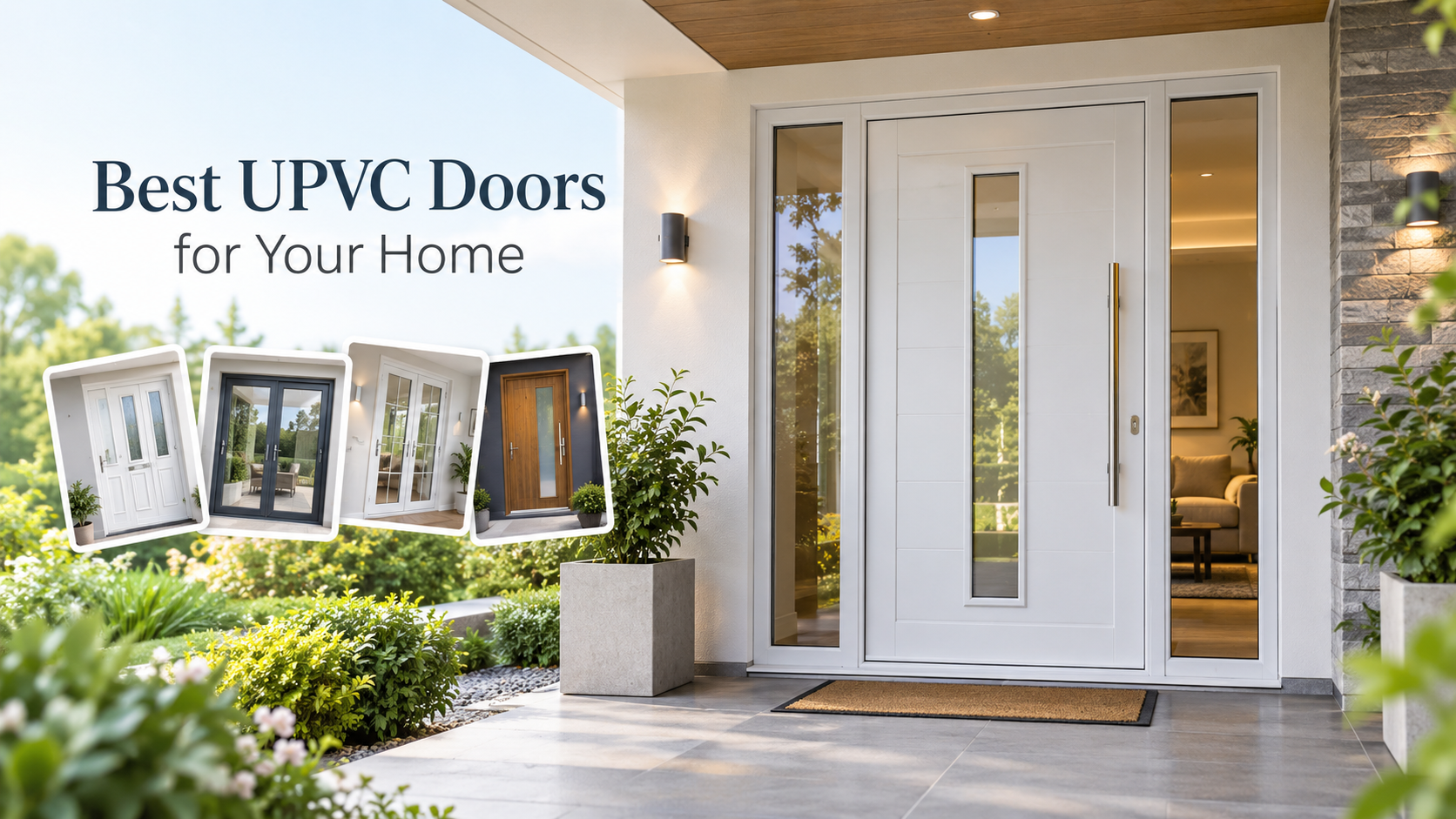
How to Choose the Best UPVC Doors for Your Home
Choosing a new door is about more than finding a design that looks attractive. A good door should suit the room, perform reliably, support ventilation and natural light where needed, and remain practical through changing weather conditions.
For homeowners searching for the best UPVC doors for home, UPVC has become an increasingly popular option because it combines durability, low maintenance, insulation, security features, and design flexibility. In a city such as Kolkata, where humidity, heavy monsoon rain, heat, and changing weather can affect traditional materials, choosing the right door material becomes even more important.
But which UPVC door should you choose? Should you buy a casement door, sliding door, folding door, or tilt-and-turn design? Is a UPVC door suitable for a kitchen or balcony? And how much should you expect to spend?
This guide explains the important factors to consider before buying UPVC doors for different areas of your home.
What Are UPVC Doors?
UPVC stands for Unplasticized Polyvinyl Chloride. It is a rigid material commonly used for manufacturing modern doors and windows.
Unlike traditional wooden doors, UPVC is less susceptible to rot and moisture-related deterioration. It is also resistant to rust and corrosion, making it useful for homes exposed to humidity and rainfall.
UPVC doors can be designed with different opening systems, glass options, colours, handles, hardware and configurations. This makes them suitable for both contemporary and more traditional residential designs.
For Kolkata homes, UPVC can be particularly practical because the material is designed to handle moisture and changing weather conditions. Promiplast’s UPVC door range is positioned for durability, insulation, low maintenance and weather resistance, with the company stating that its UPVC products resist peeling, warping and cracking under harsh UV exposure.
Why Are UPVC Doors Suitable for Modern Homes?
Modern homes increasingly combine large glass areas, open layouts, balconies and indoor-outdoor connections. The door therefore has to do more than simply provide access.
A well-designed UPVC door can complement a modern home while offering practical features such as insulation, weather resistance and relatively easy maintenance.
UPVC doors are available in multiple styles, allowing homeowners to select a configuration according to the available space. A casement door can work well where a conventional hinged opening is preferred, while sliding or folding systems can be considered where wider openings and space management are important.
Promiplast offers several UPVC door configurations, including casement, sliding, folding, top-hung and tilt-and-turn options.
The right choice therefore depends less on simply asking which door is “best” and more on asking which UPVC door is best for your particular room and usage.
Different Types of UPVC Doors for Your Home
Understanding the available UPVC door styles is one of the first steps when planning a new installation.
1. UPVC Casement Doors
UPVC casement doors operate on hinges and open in a similar way to conventional hinged doors. They are a practical choice when you want a familiar opening mechanism combined with the benefits of UPVC.
Casement doors can be used for different areas of a home and can be configured with different glass, colour and hardware options. Promiplast’s UPVC casement doors are described as offering thermal insulation, weather resistance and design flexibility, with options including different colours, glass materials, handles and mesh designs.
They can be particularly suitable for rooms where controlled access, ventilation and a conventional door opening are important.
2. UPVC Sliding Doors
Sliding doors move horizontally along a track instead of swinging into the room. This can make them useful when floor space is limited.
They are commonly considered for balconies, patios and areas where homeowners want a larger visual connection between indoor and outdoor spaces.
UPVC sliding doors can also provide large glazed areas that allow more natural light into a room. Promiplast offers sliding door options designed for residential applications, including balcony use.
3. UPVC Folding or Bi-Fold Doors
Folding doors consist of multiple panels that fold and stack to one side when opened. This creates a wider opening than a conventional hinged door.
They can be useful for kitchens opening toward dining or utility areas, balconies, patios and larger room openings. Promiplast describes its UPVC folding doors as suitable for applications including kitchens, balconies and large room divisions.
The main attraction is the ability to create a broad opening without requiring the entire door to swing into the room.
4. UPVC Tilt-and-Turn Doors
Tilt-and-turn doors offer two operating positions. Depending on the hardware configuration, the door can tilt inward for controlled ventilation or open more fully for access.
This type of door can be considered for balconies, terraces, and modern spaces where ventilation control is important. Promiplast describes tilt-and-turn UPVC doors as a versatile option for modern residential applications.
5. UPVC Top-Hung Doors
Top-hung systems use an overhead mechanism and can be useful in applications where a different opening arrangement is required.
Their suitability depends heavily on the room, opening size, and hardware configuration, so homeowners should discuss the actual site conditions with a professional before selecting this style.
UPVC Door for Kitchen: Is It a Good Choice?
The kitchen is one of the areas where door selection needs careful consideration. It can experience moisture, heat, cooking vapour and frequent cleaning.
A UPVC door can be a practical option for a kitchen because the material is resistant to moisture and does not require the same type of regular surface maintenance associated with many wooden doors.
A folding UPVC door can be useful when the kitchen connects directly to a dining area, utility space, balcony or another large opening. It can be folded away when you want a more open layout.
For a smaller kitchen opening, a casement configuration may be more practical when you need a conventional hinged door.
The important point is to choose the opening style according to available space rather than selecting a design only because it looks attractive.
UPVC Door for Balcony: Which Style Should You Choose?
Balcony doors need to balance natural light, ventilation, weather exposure, access and aesthetics.
A UPVC sliding door is often considered for balconies because the panels move along a track and do not require the same swing clearance as a conventional hinged door. This can help preserve usable floor space.
A folding door can be considered where the homeowner wants a wider opening between the room and balcony. It can create a stronger indoor-outdoor connection when the available opening is large.
Tilt-and-turn doors are another option where ventilation control is important.
For a Kolkata apartment, the final choice should also consider the balcony’s exposure to rain, wind and direct sunlight, along with the opening size and the type of glass and hardware required.
UPVC Door for Bedroom: What Works Best?
A bedroom door usually has different requirements from a balcony or kitchen door.
Here, homeowners may give greater importance to privacy, sound reduction, ventilation, appearance and ease of operation.
A casement UPVC door can be appropriate where the bedroom has access to a balcony, terrace or another external area. If the opening is compact, a hinged configuration can be easier to operate without using additional floor space for a sliding track.
For bedrooms connected to balconies, the choice of glass is also important. The door should complement the room’s privacy requirements and overall interior design.
Casement vs Folding UPVC Doors
The choice between casement and folding doors largely depends on the size of the opening and how you want to use the space.
Advantages:
UPVC Casement Doors
Casement doors have a familiar hinged operation and can provide a straightforward solution for regular access. They are suitable for many standard openings and can be customised with different glass, colour and hardware choices. They can also provide a tight closed position when correctly installed.
Limitations:
Because they swing open, casement doors require clearance in the direction of opening. This can be less convenient in compact areas or where furniture is positioned close to the doorway.
UPVC Folding Doors
Advantages:
Folding doors consist of several connected panels and can create a much wider opening. When opened, the panels fold and stack to one side, making them attractive for larger openings and indoor-outdoor spaces.
They can be particularly useful for balconies, kitchens, patios and open-plan areas.
Limitations:
Folding systems generally involve more panels, hardware and moving components than a basic hinged door. They therefore require careful measurement, appropriate hardware and professional installation.
Promiplast describes its folding UPVC doors as options for creating wide openings while supporting natural light, space utilisation and indoor-outdoor connectivity.
In simple terms: choose casement when you want a conventional hinged door and folding when creating a wider opening is a priority.
What Should You Check Before Buying UPVC Doors?
Buying a UPVC door should start with the opening rather than the catalogue.
First, check the exact width and height available for installation. A professional measurement helps determine whether the space is suitable for a single, double, sliding or folding configuration.
Next, consider how the room is used. A balcony may need a different opening system from a bedroom. A kitchen may benefit from easy access and ventilation, while a main entrance may require greater emphasis on security and hardware.
Glass is another important consideration. The appropriate glass type depends on the room, light requirements, privacy needs and performance expectations.
You should also discuss the profile quality, hardware, locking system, installation method, warranty and after-sales service before placing an order.
Promiplast states that its UPVC profiles meet EN12608-1:2016 standards and that the company provides in-house manufacturing, professional installation and end-to-end customer service.
Are UPVC Doors Energy Efficient?
One of the reasons homeowners consider UPVC doors is their insulation performance.
A properly manufactured and installed UPVC door can help reduce unwanted heat transfer through the door assembly. This can contribute to a more comfortable indoor environment and may reduce the load on air-conditioning systems, depending on the overall building design, glass specification, sealing and installation quality.
Promiplast describes its UPVC doors as offering thermal insulation and protection from rain and wind.
However, it is important to remember that door performance is not determined by the UPVC frame alone. Glass selection, profile design, seals, hardware and installation all contribute to the final result.
How Durable Are UPVC Doors in Kolkata?
Kolkata homes have to deal with humidity, seasonal rainfall, heat and strong sunlight. Materials used around balconies, external openings and frequently exposed areas therefore need to withstand these conditions.
UPVC is resistant to rot, rust and corrosion and requires comparatively low routine maintenance. Promiplast also states that its UPVC products are resistant to saltwater and chemicals and are designed to resist peeling, warping and cracking under harsh UV exposure.
This makes UPVC a practical material to consider when you want a door that does not require frequent repainting or extensive maintenance.
UPVC Door Cost in Kolkata
The cost of UPVC doors depends on several factors, so there is no single price that applies to every home.
The final quotation can vary according to the door type, dimensions, number of panels, glass specification, profile, colour or finish, hardware, locking system and installation requirements.
As an indication, Promiplast’s current UPVC casement door page lists a price range of approximately ₹1000 to ₹1,400 per sq. ft., depending on factors such as panel design, glass and hardware. Its folding-door page lists approximately ₹ 1,500 to ₹2,500 per sq. ft., depending on panel configuration, glass and customisation.
These figures should be treated as indicative rather than a fixed quotation. The most reliable way to determine the cost of your UPVC door is to have the opening measured and receive a specification-based quotation.
Why Choose Promiplast for UPVC Doors in Kolkata?
Choosing the right manufacturer is just as important as selecting the right UPVC door style.
Promiplast provides a range of UPVC doors and windows for residential and commercial applications in Kolkata and West Bengal. The company states that it combines in-house manufacturing, professional installation and end-to-end customer service with a wide range of UPVC designs.
Promiplast also states that its UPVC profiles meet EN12608-1:2016 standards and offers a 20-year warranty across its UPVC product range.
For homeowners, this means the buying process can extend beyond simply selecting a door design. You can discuss measurements, opening configurations, glass, hardware, installation, and the intended application before finalising the product.
Whether you are looking for UPVC casement doors in Kolkata, a balcony door, a folding system or another UPVC configuration, choosing the product based on the actual requirements of your home can lead to a more practical result.
Make the Right Choice Before Buying UPVC Doors
The best UPVC doors for home are not necessarily the most expensive or the most elaborate design. The right door is the one that fits the opening, matches the room’s purpose, and provides the combination of appearance, functionality, insulation, durability, and maintenance requirements you actually need.
For a bedroom or standard external opening, a casement door may provide a simple and practical solution. For a balcony, sliding or folding doors may offer better space utilisation. For a large opening between the kitchen and another living area, a folding configuration can provide a wider connection. Where ventilation control is important, tilt-and-turn doors may be worth considering.
Before buying, compare the profile, glass, hardware, locking system, installation quality, warranty and total cost rather than judging a door by appearance alone.
Get the Right UPVC Door for Your Kolkata Home
Planning to replace an old door or install UPVC doors in a new home?
Promiplast can help you evaluate the available UPVC door styles according to your space, measurements and requirements. From UPVC casement doors in Kolkata to sliding, folding and other configurations, the right selection starts with understanding how you want the door to perform.
Contact Promiplast
Promiplast Windows & Doors
Address: AA – 48, Salt Lake, Near PNB, Sector 1, Kolkata, West Bengal 700064
Phone: 098312 34910
Email: subrata.ash@gmail.com
Visit Promiplast to discuss your requirements, request a measurement and get a quotation based on your specific door size and configuration.
Frequently Asked Questions About the Best UPVC Doors for Home
What are UPVC doors?
UPVC doors are doors manufactured using unplasticized polyvinyl chloride profiles. They are known for durability, low maintenance, and resistance to moisture, rot, and corrosion. UPVC doors are available in several opening styles, including casement, sliding, folding and tilt-and-turn configurations.
Are UPVC doors suitable for modern homes?
Yes. UPVC doors are available in modern designs, colours, glass configurations and opening systems. Their combination of design flexibility, low maintenance and insulation makes them suitable for many contemporary residential applications.
Which UPVC door is best for a balcony?
The best option depends on the balcony size and the available space. Sliding doors can be useful where floor space is limited, while folding doors can be considered when a wider opening is desired. Tilt-and-turn doors can also be suitable where controlled ventilation is important.
Can I use UPVC doors for my kitchen?
Yes. UPVC doors can be used in kitchens, particularly where moisture resistance and easy maintenance are important. Folding UPVC doors can also be considered for larger kitchen openings connecting to dining or utility spaces. The final selection should depend on the opening size and intended use.
Which UPVC door is suitable for a bedroom?
A casement UPVC door can be a practical choice for a bedroom opening leading to a balcony or outdoor area. The glass, locking system and overall configuration should be selected according to privacy, ventilation, and security requirements.
What is the difference between casement and folding UPVC doors?
Casement doors operate on hinges and require clearance to swing open. Folding doors consist of multiple panels that fold and stack to one side, creating a wider opening. Casement doors are generally suited to conventional openings, while folding doors can be useful for larger openings and indoor-outdoor connections.
How much do UPVC doors cost in Kolkata?
UPVC door prices vary according to the door style, dimensions, glass, hardware and customisation. Promiplast currently lists approximately ₹1000 to ₹1,400 per sq. ft. for its UPVC casement doors and approximately ₹ 1,500 to ₹2,500 per sq. ft. for folding doors. A site measurement and product-specific quotation are recommended for an accurate price.
Are UPVC doors suitable for Kolkata’s climate?
UPVC is well suited to moisture-rich environments because it is resistant to rot, rust and corrosion. Promiplast states that its UPVC products provide resistance to rain, wind, UV exposure, saltwater and chemicals.
How long do Promiplast UPVC doors last?
Promiplast states that it provides a 20-year warranty across its UPVC product range. Actual service life can depend on product specification, installation, usage, and maintenance.
Where can I buy UPVC doors in Kolkata?
You can contact Promiplast for UPVC doors in Kolkata and discuss your required style, dimensions, glass, and hardware. Promiplast’s showroom is listed at AA-48, Salt Lake, Sector-1, Kolkata – 700064, near PNB Bus Stop and beside Karur Vysya Bank.
Does Promiplast provide measurement and installation?
Promiplast states that it provides home visits for measurements and professional installation. Installation requirements and timelines depend on the size and complexity of the project.
Final Thought
Choosing the best UPVC doors for home becomes much easier when you start with your actual requirements. Think about the room, available space, opening size, ventilation, privacy, natural light, weather exposure, and frequency of use. Then compare the UPVC door styles, glass, hardware, installation, and overall cost.
A well-selected UPVC door can bring together practical performance and modern design, helping you create a home that is comfortable, functional and visually appealing for years to come.